Discover email automation strategies forex brokers use to improve trader retention, reduce churn, and increase lifetime client value.


Discover email automation strategies forex brokers use to improve trader retention, reduce churn, and increase lifetime client value.

Forex broker email automation strategies that increase trader retention, reduce churn, and drive consistent deposit activity through personalized sequences.
Forex brokers invest heavily in acquiring new traders. They run Google Ads campaigns, build affiliate networks, post across social media channels, and optimize their websites for organic search. But most brokers underinvest in the one channel that consistently delivers the highest return on existing trader relationships: email automation.
Acquiring a new funded trader costs significantly more than retaining an existing one. Industry data from financial services CRM providers consistently shows that increasing client retention by just 5% can increase revenue by 25% to 95%. For forex brokers, where the cost per funded account regularly runs into hundreds of dollars, every trader who goes inactive or withdraws and never returns represents a significant loss on the original acquisition investment.
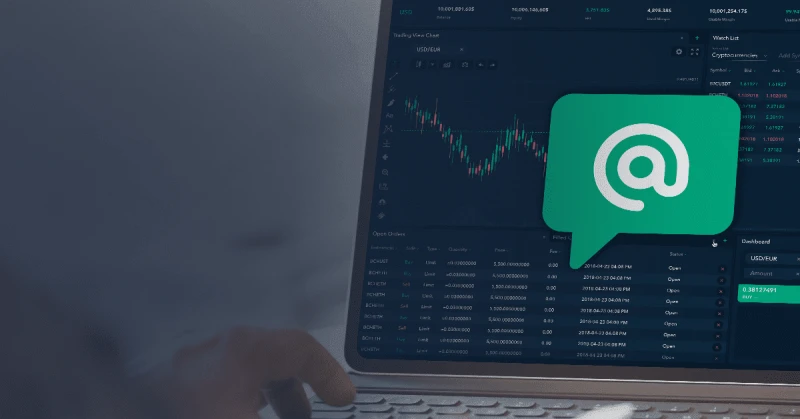
Email automation gives forex brokers the ability to maintain consistent, personalized communication with every trader on their database, at scale, without manual effort. When configured correctly, automated email sequences move new registrants through to first deposit, re-engage dormant traders, prevent churn signals from becoming permanent withdrawals, and turn single-deposit clients into long-term active accounts.
This blog covers the specific email automation strategies that forex brokers use to improve trader retention, reduce churn, and increase the lifetime value of every funded account on their platform.
Before examining specific sequences, it is worth understanding what makes email automation in forex distinct from standard e-commerce or SaaS email marketing.
Forex traders have a longer and more deliberate decision cycle than typical consumers. A new registrant may take days or weeks to make their first deposit. They compare platforms, evaluate trading conditions, read reviews, and assess regulation. A poorly timed or generic email sequence pushes them away. A well-timed sequence builds trust and removes objections at exactly the right moment.
Existing traders have highly variable engagement patterns. Some trade daily; others trade weekly around high-impact events; others go quiet for months before returning. A single broadcast email schedule does not serve these different patterns equally. Behavioral triggers — actions the trader takes or fails to take, produce far better results than time-based schedules alone.
Regulatory compliance is a requirement in financial email marketing. Any email that contains trading performance claims, promotional offers, or financial incentives must comply with the financial promotion rules in each jurisdiction you contact. Automated sequences must be built with compliant templates, risk warnings where required, and suppression lists that respect local regulations.
The gap between account registration and first deposit is where most forex brokers lose the most potential clients. A trader registers, explores the platform, and then stops, waiting for more information, hesitating over deposit methods, or being distracted by a competitor’s offer.
Your onboarding sequence exists to close this gap. It should activate immediately upon registration and continue until the trader makes a first deposit or explicitly opts out. Structure your onboarding sequence around the specific objections that stop traders from depositing.
Email 1: Immediate Welcome (Minutes 0–5) Confirm the account and introduce your core value proposition. Keep it brief: link to the platform, state your regulatory status, and provide a direct path to complete KYC.
Email 2: Platform Tour (Days 1–2) Many registrants never truly explore the interface. Send a brief orientation covering navigation and demo trades. Video-based content or animated GIFs of the dashboard significantly outperform text-only emails here.
Email 3: Funding & Incentives (Day 3) Address the deposit process directly. Detailed payment methods, minimums, and processing speeds. If you offer a welcome bonus, present it now with one singular call-to-action (CTA) leading to the deposit page.
Email 4: Trust & Security (Days 5–6) If a trader hasn’t funded by now, they likely have a trust objection. Highlight your licenses, jurisdiction, and client fund segregation. This builds the necessary credibility for those comparing multiple brokers.
Email 5: The Final Push (Days 8–10) Create urgency. Use a genuine promotion expiry date or leverage social proof, such as industry awards and testimonials. Keep the message direct and focused on conversion.
The Benchmark: An optimized automated sequence typically converts 20%–35% of registrants into funded accounts within 14 days. Without automation, conversion rates often languish between 8%–12%. Closing this gap is the most efficient way to scale your brokerage’s growth.
A trader who makes their first deposit has not yet become an active client. Many first-time depositors fund their account, log in once or twice, place a small exploratory trade, and then disengage before building a regular trading habit. This sequence addresses the critical first 30 days after funding.
Immediate deposit confirmation email: Send a confirmation the moment the deposit clears. Thank the trader, confirm the credited amount, and include a direct link to the trading platform. This email should arrive within minutes. Any delay erodes the momentum built during the deposit decision.
First trade guide: For traders who deposited but have not placed their first live trade, send a brief, actionable guide to placing their first position. Cover order types, lot sizing, and stop-loss placement. Keep this practical, not theoretical.
Market context email: Send a market update relevant to the instruments the trader accessed during platform exploration. Personalization based on what instruments a trader browsed during registration and demo use significantly improves open rates and click-throughs at this stage. A trader who explored EUR/USD during onboarding responds better to a euro area economic calendar email than a generic weekly market wrap.
Risk management education: Traders who manage risk effectively trade longer and deposit more over their lifetime. Send an email focused specifically on practical risk management: position sizing, margin requirements, and drawdown management. Frame this as protection for the trader’s capital, not as a compliance exercise. Brokers who invest in trader education consistently report higher 90-day retention rates.
30-day check-in: At the 30-day mark, send a summary of the trader’s activity and a personalized prompt to increase engagement. If they have been active, acknowledge it and introduce advanced features. If they have gone quiet, use this email to re-open the conversation with a low-friction invitation to return.
Every forex broker accumulates dormant accounts, traders who deposited, traded for a period, and then stopped. These accounts represent recapturable revenue at a fraction of the cost of new acquisition.
Define dormancy based on your platform’s typical trading patterns. For most retail forex brokers, a trader who has not logged in for 30 days warrants a re-engagement trigger. A trader inactive for 60 days requires a stronger sequence. Beyond 90 days, the probability of organic return without direct outreach drops sharply.
Trigger: 30 days without login. Send a brief, personal-tone email acknowledging the gap without making the trader feel criticized. Reference a specific market event or condition relevant to their historical instrument preferences. Include a single, low-friction call to action: “Check your account” or “See what’s moved in the markets.” Do not lead with a promotional offer at this stage. Traders who disengage due to a negative trading experience respond poorly to immediate incentive offers.
Trigger: 60 days without login. At this stage, introduce a genuine re-activation incentive if your regulatory environment permits. A deposit bonus, reduced spread promotion, or cashback offer gives a dormant trader a concrete reason to return beyond general market interest. Pair the incentive with a direct, transparent explanation of the terms and a visible expiry date.
Trigger: 90 days without login. Send a direct, honest email. Acknowledge that the trader has been away for a while and ask whether they want to remain on your mailing list. This segmentation email performs two functions: it removes traders who are permanently disengaged from your active database, improving deliverability metrics, and it frequently generates re-engagements from traders who had simply forgotten about their account.
Churn prevention is the most sophisticated email automation challenge for forex brokers because it requires connecting CRM and platform behavioral data to your email platform in near-real-time.
Several behavioral signals indicate elevated churn risk before a withdrawal request arrives. Traders who log in but do not trade, traders who reduce position sizes progressively over multiple sessions, traders who access the withdrawal page without submitting a request, and traders whose support ticket history includes complaints about execution or spreads all show elevated churn probability.
Build triggered email sequences around these signals, not just around the final withdrawal action.
Trigger: Withdrawal page visit without submission. Within 24 hours, send a proactive outreach email from a named account manager or support representative. Do not reference the withdrawal page visit directly, that reads as surveillance and creates a negative response. Instead, offer to assist with any questions about the account, review trading conditions, or discuss available promotions.
Trigger: First withdrawal request on a previously active account. Send an immediate email that acknowledges the withdrawal and processes it without friction, but also introduces the broker’s loyalty program, VIP tier conditions, or any active retention promotion that the trader may not be fully aware of. Many withdrawals occur because traders feel unrecognized despite consistent activity. A timely reminder of the benefits available to them at their current trading volume frequently reduces the final withdrawal amount or converts a full withdrawal to a partial one.
Trigger: Second withdrawal request within 30 days. Escalate to a personal outreach sequence. Assign a named account manager to make direct contact, both via email and via the trader’s preferred communication channel. A data-driven outreach at this stage, offering a personalized trading condition review, is your last systematic opportunity to retain the client before they transfer to a competitor.
The sequences above only produce strong results when they operate on properly segmented audiences. Sending the same email to a professional trader with a $50,000 balance and a first-time retail trader with a $200 deposit is the most common email marketing failure in the forex industry.
Segment your trader database along these dimensions before building any automation:
Effective email automation for forex brokers requires connecting three systems: your email marketing platform, your CRM, and your trading platform. Without this integration, you cannot trigger emails based on trading behavior, and your segmentation remains limited to registration-time data.
The most effective setups use a CRM platform, such as Salesforce, HubSpot, or a forex-specific CRM — as the central data hub, with your trading platform pushing activity data in real time via API. Your email platform connects to the CRM and fires sequences based on data fields and behavioral triggers maintained there.
The key data points your email platform needs from your trading platform include: last login date, last trade date, current account balance, cumulative deposits, cumulative withdrawals, most-traded instruments, and open support ticket status. With these seven fields available in your email platform’s segmentation engine, you can trigger every sequence described above with precision.
None of the sequences above function if your emails land in spam folders. Forex broker emails face elevated spam filter scrutiny because financial services and trading-related keywords trigger aggressive filtering across major email clients.
Maintain a sender reputation by authenticating your sending domain with SPF, DKIM, and DMARC records. Send from a dedicated IP address separated from your transactional email infrastructure. Suppress unengaged contacts regularly, contacts who have not opened an email in 180 days dilute your engagement rate and damage your sender score. Monitor bounce rates, spam complaint rates, and inbox placement rates through a deliverability monitoring tool rather than relying solely on your email platform’s reporting.
Keep your email list clean and permission-based. Forex brokers sometimes import cold prospect lists or purchased data into their CRM and attempt to email them through the same infrastructure as their registered trader base. This is both a compliance risk under GDPR and similar data protection frameworks, and a deliverability disaster that affects emails going to your legitimate trader database.
Standard email metrics, open rate and click-through rate, tell you whether your emails generate engagement. For forex brokers, the metrics that matter most are downstream of the inbox.
Registration-to-deposit conversion rate by sequence variant: Measure what percentage of traders who enter your onboarding sequence go on to make a first deposit, broken down by sequence variant and email version. This is your primary optimization target for the onboarding sequence.
30-day and 90-day retention rate by cohort: Track what percentage of traders who deposit in a given month are still active 30 and 90 days later. Compare this metric across acquisition cohorts and correlate with email engagement to identify which sequence elements have the strongest effect on long-term retention.
Revenue per email sent: Divide total revenue generated in a period by the number of emails sent to the funded trader database in that period. This metric normalizes email performance across campaigns of different sizes and gives you a clean comparison of sequence effectiveness over time.
Re-engagement conversion rate: Of the dormant traders who enter your re-engagement sequence, measure what percentage return to active trading status within 60 days. Track this by dormancy length to understand at which point re-engagement campaigns produce diminishing returns.
Most forex brokers focus almost all of their marketing investment on acquiring new traders. Email automation shifts the performance equation by maximizing the return on traders already in the database.
A broker with a database of 10,000 registered traders and a 15% funded-account rate has 8,500 non-funded registrants who cost acquisition budget to reach and who represent an under-activated asset. A properly built onboarding sequence recovers a significant portion of these registrants at near-zero marginal cost per conversion.
Similarly, the dormant trader database that most brokers treat as a write-off regularly responds to well-designed re-engagement sequences at conversion rates that outperform cold acquisition campaigns. The trader already knows your platform, completed KYC, and made at least one deposit. The barrier to reactivation is lower than the barrier to first conversion.
Brokers that build robust email automation systems in 2025 and 2026 are not simply adding a new marketing channel. They are building a systematic, compounding trader retention infrastructure that reduces churn, increases lifetime value, and generates more revenue from the same acquisition spend, creating a durable competitive advantage that competitors who rely solely on paid acquisition cannot easily replicate.
Discover more insightful content and stay updated with the latest trends in digital marketing by visiting FXADV.